Yahtzee® With Buddies: Dice
- 4.5
- Rating
- 10.00M
- Installs
- Free
- Price
 Analysis by App-foxy
I enjoy board games most when they are easy to start but still give me a reason to think about the next move. Yahtzee® With Buddies Dice Fun takes that familiar dice format and turns it into a mobile game built for short sessions, repeat attempts, and friendly competition. I found it immediately recognizable, yet more structured than simply rolling dice around a table and writing down a score.
That balance is the main reason I can recommend it to people who already like Yahtzee or want a casual game that does not demand constant attention. It is free to download, developed by Scopely, and carries an Everyone age rating. The game has also attracted a large audience, with more than ten million installs and an average rating of 4.4 from roughly 293 thousand ratings. Those figures suggest a well-established board game rather than an experimental release.
My experience was strongest when I treated each match as a compact decision-making exercise instead of expecting a deep strategy game. The dice introduce luck, but the important moments come from deciding which result to protect, which category to pursue, and when to stop chasing an attractive combination. That familiar tension gives the game its identity.
You May Also Like

 Blood Strike: 2.5 Anniversary
Blood Strike’s Loadouts Turn Every Drop Into a Tactical Gamble
A close look at Blood Strike’s custom loadouts: how fast access to signature weapons reshapes its battle royale rhythm, rewards preparation, and narrows the gap between fights.

 Pandora - Music & Podcasts
Pandora’s Music Is Easy to Start, but Harder to Recover
Pandora’s strength is its low-effort path from a seed to a station. Its weak spot is how much confidence it asks you to place in connection, setup, and quiet recovery.

 8 Ball Pool
 Is Built on Rivalries, Rematches, and Routine
A close look at the rivalries, rematches, shared routines, and unanswered safety questions that turn a quick pool match into a persistent mobile community.

 Samsung Music
’s Quiet Strength Is Playing What You Already Own
Its reach comes less from spectacle than from dependable access to a personal library. That simplicity is both the app’s strongest retention engine and its ceiling.

 AccuWeather: Weather Radar
AccuWeather Review: A Quick, Clear Forecast for Everyday Decisions
For everyday plans, the best forecast is the one you can understand quickly. AccuWeather makes rain timing, radar, and local conditions easy to act on, with a few trade-offs.

 Hill Climb Racing
Why Hill Climb Racing Still Turns Crashes Into One More Run
A tiny car, a bumpy hill and one more upgrade: Hill Climb Racing keeps resurfacing because its simple chaos makes every near-miss feel personal.
More From Our News Desk



How the first goals make each match understandable
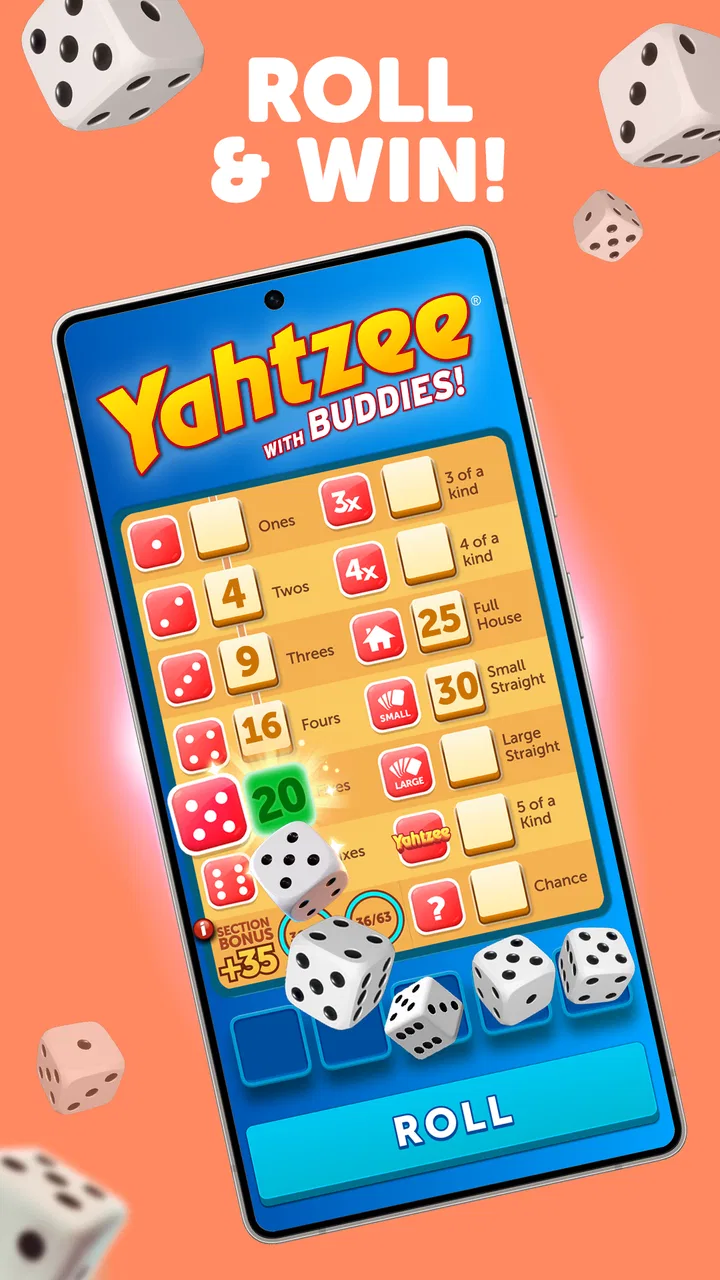
The opening appeal is straightforward: roll the dice, choose what to keep, roll again, and place the result where it helps your score. That basic loop is approachable enough for someone who has not played a dice board game recently. I never felt that I needed a long tutorial to understand what I was supposed to do.
What makes the early sessions more engaging than a plain digital score sheet is the presence of immediate targets. A good roll creates a small goal: complete a combination, improve a category, or avoid wasting a valuable scoring opportunity. These goals are modest, but they arrive at the right time. I could focus on the current turn rather than worrying about a huge progression system before I had learned the rules.
For a new player, I suggest resisting the urge to chase the most dramatic combination every time. A tempting roll can lead to a poor final score if it forces you to sacrifice a category that would otherwise provide dependable points. I got better results when I looked at the whole scorecard and asked which spaces were becoming difficult to fill, rather than treating every turn as a search for the flashiest outcome.
This is also where the game works well for everyday use. If I have only a few minutes while waiting for an appointment, I can make progress without committing to a long board-game night. If I have more time, I can continue into another round. That flexible pacing is more convenient than setting up physical dice, a score sheet, and a table, especially when I simply want one quick challenge.
The social framing adds another reason to return, although the core pleasure still comes from the dice decisions. Players who enjoy comparing results with friends will find more motivation than someone who only wants a solitary puzzle. I would describe it as a casual competitive board game first, with the social element making repeated play feel less isolated.
Small choices matter more than lucky-looking rolls
One useful habit is to decide what kind of turn you are playing before the final roll. If I am protecting a reliable score, I keep the useful dice and accept a modest result. If I am behind, I may take a calculated risk, but I try to understand what I am giving up. This simple approach prevents the common mistake of treating every roll as an invitation to gamble.
Another practical tip is to watch the categories you have already used, not just the dice on screen. A result that looks ordinary may be valuable because it fills an awkward space cleanly. Conversely, a strong-looking combination can be wasteful if it is placed in the wrong category. The game rewards attention to the remaining scorecard more than quick tapping.
Progress signals and the feeling of moving forward
The game’s progress is most satisfying when a player can connect a completed match with a clear improvement in decision-making. I began to recognize when a turn was worth saving and when it was better to secure a safe score. That personal improvement is important because dice games naturally contain luck; without it, a sequence of unlucky rolls could feel meaningless.
Unlocks and goals can help give repeated matches a shape, but the pacing works best when I focus on short-term objectives rather than expecting every session to deliver a major reward. The game is designed around returning to the dice, refining choices, and pursuing the next challenge. That makes it suitable for players who enjoy gradual progress more than one large campaign with a dramatic ending.
I also appreciate that the familiar Yahtzee structure provides its own progress signals. Completing a difficult combination, filling a weak category without ruining the rest of the card, or recovering from a bad opening turn all feel like tangible accomplishments. These moments are easy to understand because they come directly from play, not from an unrelated checklist.
For families and casual groups, that clarity is valuable. Someone can learn the scoring logic and quickly understand why a result was successful. I would be comfortable handing the game to a friend who does not usually play mobile games, provided they already know or are willing to learn the basic dice rules. The game’s board-game foundation does much of the teaching itself.
However, players who need a very strong long-term narrative may find the progression less compelling. This is not the kind of experience I would choose for character development, exploration, or a story campaign. Its forward motion comes from matches, goals, and improving choices. That is enough for a relaxed board-game player, but it may feel light to someone looking for a large adventure.
How to keep progress from becoming repetitive
I found that changing my personal objective helped maintain interest. One session could be about playing safely and completing the scorecard efficiently; another could focus on taking a risk when the situation justified it. This does not change the rules, but it changes how I read each turn. It also makes losses more useful because I can identify whether the problem was bad luck or an overly ambitious decision.
It is worth setting a stopping point before beginning a long run of matches. Dice games can make one more attempt feel attractive after a narrow loss, but repeated play without a clear goal can turn the experience into routine tapping. I enjoyed it more when I played toward a specific challenge or a social rematch instead of continuing automatically.
Difficulty, pacing, and the role of luck
The difficulty curve is gentle at the beginning because the rules are familiar and each turn is broken into manageable choices. The challenge grows less through complicated controls and more through pressure on the scorecard. As the available categories shrink, a previously harmless bad roll can become a serious problem.
That curve feels fair when I remember that the game is about managing uncertainty, not eliminating it. There is no perfect way to force a result. The skill lies in recognizing the best option among imperfect ones. I like that distinction because it keeps the game from becoming a reflex test. A fast player is not automatically a better player; a thoughtful player can often recover from an awkward roll.
At the same time, luck can still dominate an individual match. A careful decision does not guarantee a favorable outcome, and that may frustrate players who want every result to reflect pure skill. I would not recommend this as a competitive game for someone who dislikes random outcomes. The appeal depends on accepting that a smart plan can fail and that the next turn may offer a chance to recover.
The pacing is especially effective for mobile play. Turns are naturally divided into small actions, so I can pause mentally between rolls and decide what matters. It does not require the continuous concentration of a strategy game played in real time. That makes it a good companion for a commute or a short break, although I would avoid playing while doing anything that requires full attention.
Compared with a physical Yahtzee set, the mobile version is faster to begin and easier to repeat. It handles the scorekeeping and gives the experience a more persistent structure. The trade-off is that the physical version has a warmer social atmosphere: passing dice around a table and reacting to one another’s rolls feels more personal than playing through a screen. I see the app as a convenient extension of the board game, not a complete replacement for a real group gathering.
Compared with other casual mobile board games, this one has a narrower central loop. That is a strength if you want dice decisions without learning a large collection of rules. It is a weakness if you need constant novelty or several different types of gameplay. I would pick it over a more elaborate board-game app when I want a quick, recognizable challenge, but I would choose a broader strategy title for a longer evening session.
Where the difficulty can feel less comfortable
The biggest friction comes from the tension between a short match and the desire to improve a result. A poor early turn can make the rest of the card feel like damage control. Sometimes that is interesting; sometimes it makes me want to restart rather than patiently recover. Players who prefer a clean sense of control should know that the game’s uncertainty is not a side detail. It is the foundation of the experience.
There is also a difference between a challenge that comes from decision-making and pressure that comes from wanting to keep playing. I enjoyed the former much more. When I was focused on a specific goal, the pacing felt purposeful. When I played simply because another round was available, the loop could become repetitive. Recognizing that difference helps prevent the game from taking more time than intended.
Retention pressure and spending boundaries
Because the game is free, it is easy to try without making a commitment. That is a genuine advantage for families and casual players who want to see whether the dice loop suits them. The store lists in-app purchases ranging from $0.99 to $189.99 per item, so I would recommend deciding in advance whether you want to spend anything at all.
My advice is to treat purchases as optional extras rather than part of the basic reason to install the game. The core appeal is the roll-and-score loop, and a player should first decide whether that loop is enjoyable on its own. If the game becomes less fun without chasing every available reward or advantage, it may be better to step away rather than spend simply to maintain momentum.
This matters particularly for younger players, even though the content rating is Everyone. An age rating describes the intended content level, not a personal spending plan. If a child uses the game, I would make the purchase expectations clear before play begins and keep the decision with the adult. That small boundary protects the casual nature of the experience.
Retention works best here when it gives me a reason to return without making the session feel like an obligation. Short challenges, rematches, and the desire to improve a previous result are healthy motivations. The less comfortable side appears when I feel pushed to continue after a disappointing roll or narrow loss. I found that taking a break preserved the fun better than immediately trying to repair a bad session.
One useful routine is to separate “practice play” from “competitive play.” In practice, I can experiment with risky category choices and learn how I react to different rolls. In competitive play, I use safer decisions when the scorecard demands them. This makes the game feel less punishing and gives the progression a clearer purpose: each match teaches me something I can apply next time.
The current version is 9.0.15, and the game supports devices running Android 7.0 or later. Those details matter if you are installing it on an older phone or tablet. I would also leave enough storage and battery comfort for regular play rather than assuming that a familiar board-game concept means every device experience will feel identical.
Who should play and who should skip it
I think it is a strong fit for fans of classic dice games, families seeking an accessible mobile activity, and players who like competition in small doses. It also suits people who enjoy making decisions under uncertainty but do not want a complicated rulebook. The free entry point makes it easy to test, and the Everyone rating makes it broadly approachable.
I would skip it if you want a purely skill-based contest, a deep campaign, or a game with a constantly changing set of mechanics. I would also avoid it if random outcomes make you angry, because even excellent choices cannot control every roll. Someone who mainly wants a relaxed solo puzzle may prefer a game with less competitive pressure and a more predictable route to success.
For a real everyday scenario, imagine having ten minutes before dinner while a friend is also checking their phone. A quick match can give you a shared activity without requiring a full table setup. If both of you enjoy the result, a rematch has an obvious purpose. If one person loses interest, the game has not demanded a large block of time. That flexibility is one of its most practical strengths.
My progression verdict
Yahtzee® With Buddies Dice Fun sustains play through a clear chain of small goals: make the best of the current roll, complete the scorecard intelligently, improve your judgment, and return for another challenge. The progression is not about a sweeping story or complex world. It is about turning familiar rules into a repeatable mobile routine with enough competition to make each decision matter.
After spending time with it, I see the best version of the game as a focused casual experience. The early goals are easy to understand, the progress signals come from both objectives and personal improvement, and the difficulty rises naturally as safe categories disappear. The pacing is convenient, but it needs self-control because a narrow loss can make another attempt feel more urgent than it really is.
I would recommend installing it if you want a free board game that starts quickly and gives you meaningful choices without overwhelming you. I would approach the in-app purchase range carefully, set a spending boundary, and judge the game by whether the basic dice loop remains enjoyable without extras. For me, that is the decisive test.
Scopely’s game succeeds because it respects the simple pleasure at the heart of Yahtzee while giving it a more persistent mobile setting. It does not remove luck, and it should not be mistaken for a deep strategy title, but it makes each turn readable, compact, and occasionally tense. If that combination sounds appealing, this is an easy recommendation for a short session with room for a rematch.
FAQs for Yahtzee® With Buddies: Dice
01What is Yahtzee® With Buddies Dice Fun?
Yahtzee® With Buddies Dice Fun is a mobile version of the classic dice game, Yahtzee. It allows players to enjoy the game solo or compete against friends and family in multiplayer mode. The app introduces various game modes, tournaments, and challenges, enhancing the traditional gameplay with new and exciting features.
02Is Yahtzee® With Buddies Dice Fun free to play?
Yes, Yahtzee® With Buddies Dice Fun is free to download and play. However, the app offers in-app purchases that provide additional features, such as extra dice rolls, custom dice, and more. These purchases are optional, and players can enjoy the core game without spending money.
03How does the multiplayer feature work in Yahtzee® With Buddies Dice Fun?
The multiplayer feature in Yahtzee® With Buddies Dice Fun allows players to connect with friends or challenge players worldwide. You can invite friends via social media or your contact list. The game supports turn-based play, so you can take your turn and wait for your opponent to respond at their convenience.
04What are the system requirements for Yahtzee® With Buddies Dice Fun?
Yahtzee® With Buddies Dice Fun is available for both Android and iOS devices. For Android, it requires version 5.0 and up, while iOS users need iOS 11.0 or later. The app is optimized for both smartphones and tablets, ensuring a seamless gaming experience across devices.
05Are there any special features in Yahtzee® With Buddies Dice Fun?
Yes, the app includes several special features to enhance gameplay. These include daily challenges, custom dice, and seasonal tournaments. Players can also join leagues to compete for rewards. The game offers a chat function, allowing players to communicate and strategize with friends during matches.
Pros
- Engaging multiplayer feature with friends.
- Daily challenges keep gameplay fresh.
- Vibrant and user-friendly interface.
- Customizable dice and boards.
- Regular updates with new content.
Cons
- In-app purchases can be pricey.
- Requires a stable internet connection.
- Ads can be intrusive at times.
- Notifications can be overwhelming.
- Some features locked behind paywall.

Yahtzee® With Buddies: Dice
Gallery